Applications and Characteristics of Free-Cutting Brass
Free-cutting brass is used for precision parts machining. The most classic representative grades are C3604 (Japanese standard) or C36000 (American standard).
The most distinctive feature of this material is the addition of trace amounts of lead (Pb) to the brass. This causes the chips to break into small fragments during machining, preventing them from tangling with the tool and making it ideal for high-efficiency automated production.
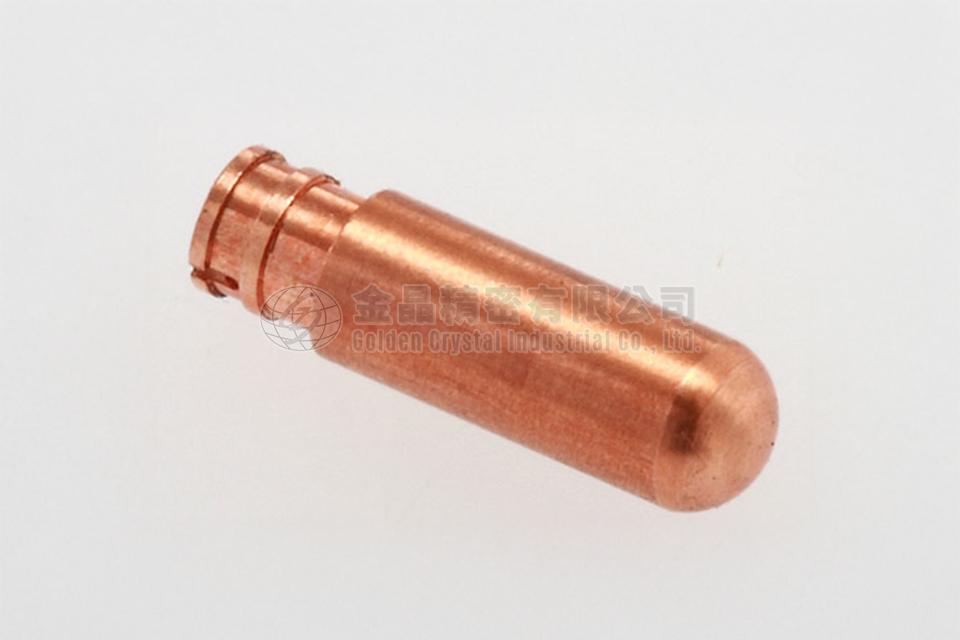
The following are the main application areas of free-cutting brass:
1. Precision Electronic and Electrical Components
Due to its excellent conductivity and machining precision, it is a common material in the electronics industry.
- Connector Pins: Conductive pins inside various electronic plugs and sockets.
- Bolts and Nuts: Small parts used for fixing circuit boards or as terminals.
- Sensor Housings: Sensor components requiring CNC precision machining of threads.
2. Watches and Precision Instruments
This is perhaps where free-cutting brass best demonstrates its "delicate" qualities.
- Gears and Shafts: Miniature gears inside clocks require extremely high dimensional stability.
- Instrument Hand Holders: Lightweight components requiring precision drilling.
3. Bathroom Hardware and Plumbing Fixtures
Brass naturally possesses certain antibacterial and corrosion-resistant properties, and has an aesthetically pleasing appearance.
- Faucet Valves: Precision valves requiring frequent rotation and high sealing requirements.
- Pipe Fittings: Various quick couplings, tees, and nozzles.
4. Automotive and Mechanical Engineering
In automated parts manufacturing, cost and efficiency are key.
- Valve Nozzles: Inflation valves on tires.
- Fuel Nozzles: Components in fuel or lubrication systems requiring precise injection orifices.
- Bushings and Washers: Utilize their self-lubricating properties to reduce mechanical wear.
Summary of Free-Machining Brass Characteristics
| Characteristic | Description |
|---|---|
| Machinability | The benchmark for all copper alloys (100%), extremely fast machining speed. |
| Electrical & Thermal Conductivity | Superior to steel and stainless steel, suitable for motor applications. |
| Appearance | Bright surface, easy to electroplate (e.g., chrome plating, nickel plating) or polish. |
| Recycling value | High recycling value, economically viable. |
Note: With increasingly stringent environmental regulations (such as RoHS), leaded free-cutting brass is restricted in certain devices that come into contact with drinking water or food. Many "lead-free free-cutting brass" alternatives are now available on the market.