
Wide Applications and Properties of Aluminum Alloys
Aluminum alloys, used in precision machining, are hailed as the "vitamins of modern industry" due to their lightweight, high strength, corrosion resistance, and excellent machinability. From the mobile phone in your pocket to satellites in space, they are virtually ubiquitous.
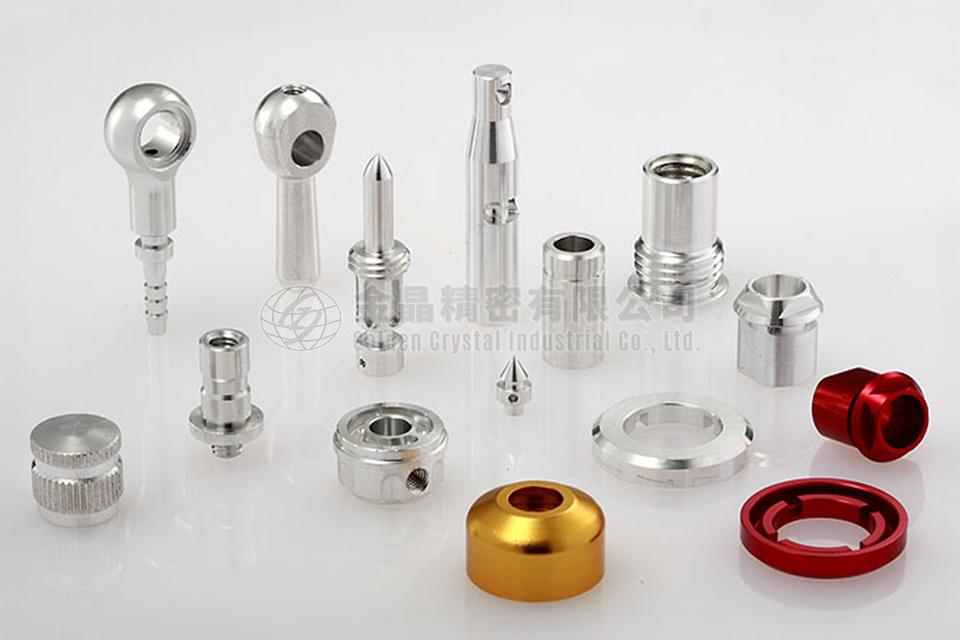
The following is an analysis of the applications of aluminum alloys in major core fields:
1. Transportation: A Major Force in Energy Conservation and Carbon Reduction
This is the primary application area for aluminum alloys, with the core objective of "replacing steel with aluminum" to reduce weight.
- Aerospace Industry: Utilizing high-strength 2000 series (aluminum-copper) and 7000 series (aluminum-zinc) alloys. Used in aircraft skin, wing spars, and landing gear.
- Automotive Manufacturing: To improve the range of electric vehicles, aluminum alloys are extensively used in chassis, engine blocks, and wheel rims, reducing vehicle weight by approximately 30%–50%.
- Rail Transit: High-speed rail and subway cars largely use extruded aluminum alloy profiles, effectively reducing operating energy consumption.
2. Electronics & Communications: A Combination of Heat Dissipation and Aesthetics
Aluminum alloys' excellent thermal conductivity and the texture achieved through anodizing make them a top choice for consumer electronics.
- Casings: Such as laptop casings (MacBook is a prime example), and smartphone frames.
- Heat Dissipation Components: Computer heat sinks, LED light fixture bases, utilizing their high thermal conductivity for rapid heat dissipation.
3. Architecture & Structures: A Durable and Long-Lasting Choice
Aluminum alloys naturally form an oxide film on their surface, making them extremely weather-resistant.
- Architectural Doors & Windows: Aluminum doors and windows, curtain wall systems.
- Large Structures: Greenhouse frames, truss structures for skybridges and exhibition halls.
4. Packaging & Daily Necessities
- Food Packaging: Aluminum foil, aluminum cans (3000 series aluminum-manganese alloy). They offer good barrier properties and are 100% recyclable.
- Sports Equipment: Hiking poles, bicycle frames, tennis rackets.
Quick Reference Table of Common Aluminum Alloy Series and Applications
| Series | Main Alloying Elements | Properties | Common Applications |
|---|---|---|---|
| 1000 Series | Pure Aluminum | Excellent conductivity, soft, corrosion resistant | Wires, aluminum foil |
| 2000 Series | Copper (Cu) | Extremely high strength (duralumin) | Aircraft structures |
| 5000 Series | Magnesium (Mg) | Resistant to seawater corrosion, good weldability | Shipbuilding, automotive parts |
| 6000 Series | Magnesium + Silicon (Mg + Si) | Easy to extrude, moderate strength | Architectural aluminum windows, bicycle frames |
| 7000 Series | Zinc (Zn) | Ultra-high strength | Aerospace, high-end sports equipment |
Fun Fact: Aluminum is the most abundant metallic element in the Earth's crust, but due to the difficulty of refining it in the early days, its price in the 19th century was even higher than gold. Napoleon III even used aluminum tableware to entertain his most distinguished guests!
Precision Aluminum Alloy Parts Machining
Precision CNC machining of aluminum alloys is a cornerstone of modern manufacturing. Due to its high strength-to-weight ratio, excellent thermal conductivity, and corrosion resistance, it is widely used in aerospace, medical devices, electronics, and semiconductor equipment.
To achieve true "precision," one must master three dimensions: material properties, machining processes, and environmental control.
1. Common Aluminum Alloy Grades
Selecting the right grade is the foundation of precision, as machining characteristics vary significantly:
- 6061-T6: The most versatile grade. Excellent machinability, weldability, and structural strength.
- 7075-T6: Aerospace-grade aluminum. Extremely high strength (comparable to some steels) but prone to higher internal residual stress.
- 5052: Superior corrosion resistance, commonly used for sheet metal work or marine applications.
- 2024: High strength and fatigue resistance, frequently used for aircraft structural components.
2. Key Technologies for Precision Machining
While aluminum is easy to cut, its high coefficient of thermal expansion and relative softness can lead to deformation.
- High-Speed Cutting (HSC): Aluminum performs best at high spindle speeds. This reduces cutting forces and allows chips to carry away heat, preventing thermal deformation of the workpiece.
- Stress Relief: For high-strength materials like 7075, a cycle of Rough Machining -> Stress Relief (Vibration or Thermal) -> Finish Machining is required to release internal tension.
- Tool Selection: Polished Tungsten Carbide or PCD (Polycrystalline Diamond) tools are preferred. These prevent Built-Up Edge (BUE) and ensure a mirror-like surface finish ($Ra < 0.8\mu m$).
3. Common Surface Treatments
Post-processing enhances the durability, conductivity, and aesthetics of the precision part:
- Anodizing: Increases surface hardness and corrosion resistance. Hard Anodizing is used for parts requiring extreme wear resistance.
- Chromate Conversion (Alodine): Provides corrosion protection while maintaining electrical conductivity.
- Sandblasting & Brushing: Used to create a matte or textured finish and remove minor machining marks.
- Electropolishing: Results in an ultra-high gloss finish, typically required for medical and semiconductor vacuum components.
4. Factors Affecting Precision
| Factor | Impact | Solution |
|---|---|---|
| Thermal Expansion | High expansion coefficient causes dimensional drift. | Process in climate-controlled shops; monitor coolant temperature. |
| Clamping Deformation | Thin-walled parts warp under chuck/vise pressure. | Use custom fixtures, vacuum chucks, or specialized adhesives. |
| Tool Wear | Affects dimensional consistency and surface finish. | Implement tool life management and automatic tool setting (renishaw probes). |
Do you have a specific technical drawing or a 3D model (STEP/IGS) ready for a manufacturability review? I can help you analyze the machining feasibility for specific alloys or provide detailed strategies for thin-wall deformation control based on your design requirements.