
Applications and Properties of Nickel Alloys
03 03, 2026
Material Machining
Nickel alloys, used in precision machining of parts, are hailed as the "vitamins of industry" in modern industrial applications. This is not only because they impart superior properties to other metals, but also because of their stability under extreme environments (high temperatures, strong corrosion).
Below is a summary of the core characteristics and mainstream applications of nickel alloys:
Core Characteristics: Why Choose Nickel Alloys?
The irreplaceable nature of nickel alloys stems primarily from the unique physical and chemical properties resulting from their atomic structure:
- Excellent Corrosion Resistance: Exhibits extremely strong resistance to corrosion in reducing environments and acidic media (such as sulfuric acid and hydrochloric acid).
- Excellent High-Temperature Strength: Many nickel-based superalloys maintain extremely high mechanical strength and creep resistance even at temperatures above 700°C.
- High Toughness and Ductility: Resistant to brittleness even at low temperatures (cryogenic environments).
- Special Physical Properties: Some alloys possess low coefficients of thermal expansion (e.g., Invar alloys) or shape memory properties (e.g., nickel-titanium alloys).
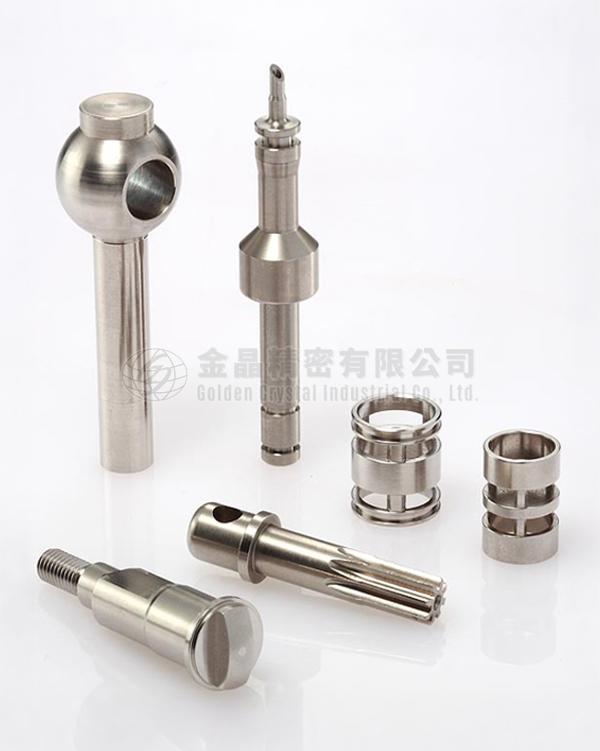
Main Classifications and Applications of Nickel Alloys
- Aerospace and Power Generation (High-Temperature Alloys)
This is the most cutting-edge application area for nickel alloys.- Representative Models: Inconel 718、René 41。
- Application Scenarios: Aircraft engine turbine blades, combustion chambers, rocket engines.
- Reason: These components must withstand enormous centrifugal forces while resisting the high-temperature oxidation generated by fuel combustion.
- Chemical and Oil & Gas Industries (Corrosion-Resistant Alloys)
Ordinary stainless steel often falls short in the face of strong acids, strong alkalis, and high-pressure environments.- Representative Models: Hastelloy, Monel 400.
- Application Scenarios: Offshore drilling platforms, chemical reaction tanks, heat exchangers.
- Reason: Monel alloys have excellent corrosion resistance to seawater, while Hastelloy is the preferred choice for treating industrial wastewater.
- Electronics and Precision Instruments (Special Physical Properties)
- Representative Models: Invar 36, Mu-metal (High Permeability Alloy).
- Applications: Precision instrument frames, precision optical equipment, magnetic shielding.
- Reason: Invar alloy has an extremely low coefficient of thermal expansion, ensuring dimensional stability of instruments under temperature changes.
- Medical Field (Biocompatibility)
- Representative Model: Nitinol.
- Applications: Orthodontic wire, cardiac stents.
- Reason: Possesses "shape memory" and "superelasticity," allowing it to adapt to the dynamic environment within the human body.
Overview of Nickel Alloy Materials
| Alloy Series | Main Additives | Key Properties | Common Applications |
|---|---|---|---|
| Nickel-Chromium Based (Inconel) | Chromium, Molybdenum, Niobium | High-temperature oxidation resistance, creep resistance | Aerospace, nuclear reactors |
| Nickel-Copper Based (Monel) | Copper | Resistant to seawater and hydrogen fluoride corrosion | Shipbuilding, chemical processing |
| Nickel-Molybdenum/Chromium Based (Hastelloy) | Molybdenum, Chromium, Tungsten | Extremely strong general corrosion resistance | Chemical processes, environmental desulfurization |
| Nickel-Iron Based (Invar) | Iron | Extremely low thermal expansion coefficient | Television masks, liquefied gas carriers |
The development of nickel alloy parts is currently moving towards additive manufacturing (3D printing) powders, which will significantly reduce the difficulty of CNC machining high-hardness nickel alloys.